Daily Action Item
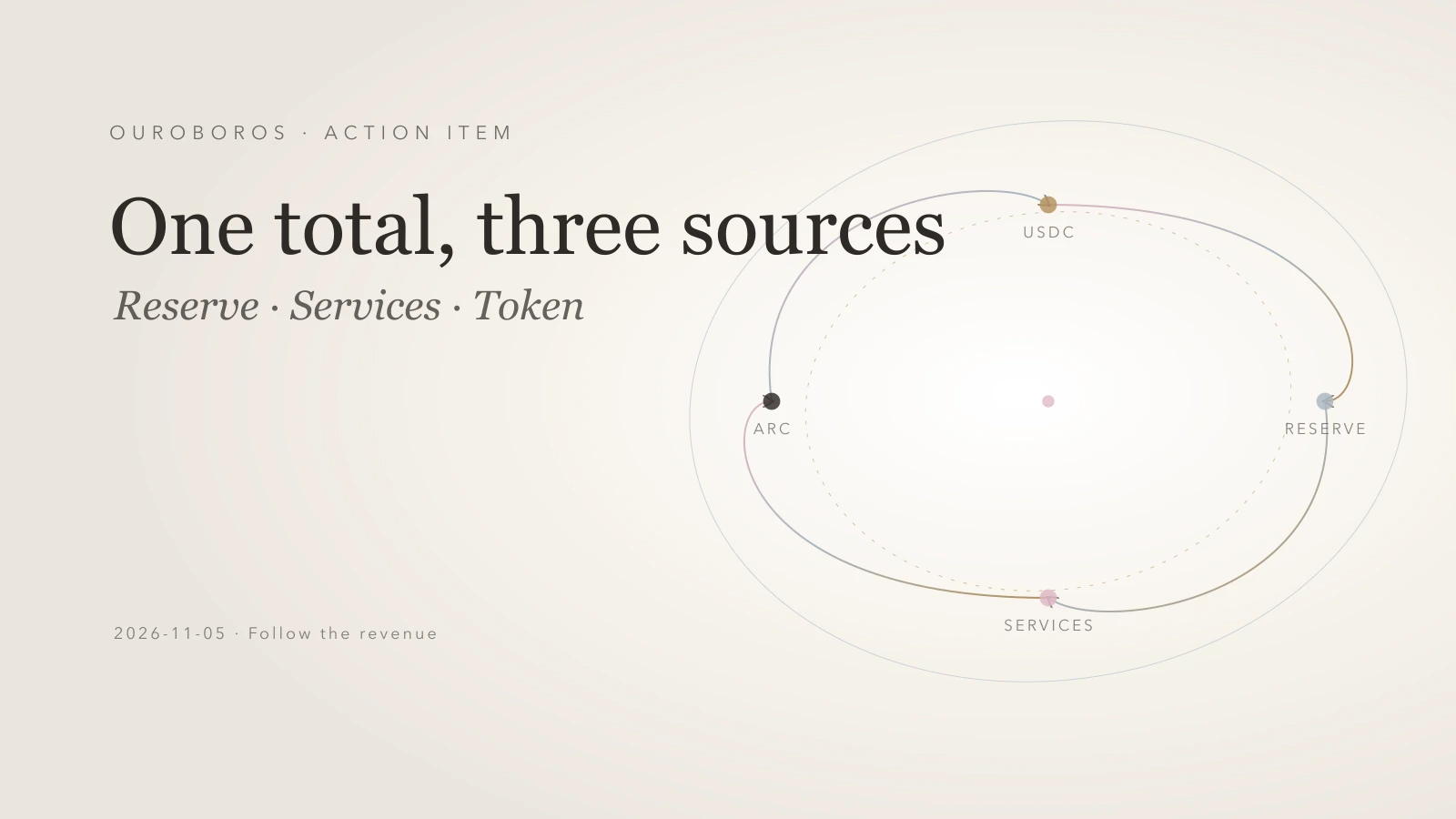
What Actually Grew Inside Circle?
Circle’s business begins with a digital dollar and the assets backing it.
Circle Internet Group is a public financial technology company whose regulated affiliates issue USDC, a dollar-denominated payment stablecoin. A stablecoin is a digital token designed to hold a steady value against a currency. USDC is backed by reserve assets and moves across blockchains, shared digital records that keep track of transfers.
That arrangement gives Circle two related businesses. It earns income from the assets held in reserve, and it earns other revenue from products, transactions and services. Circle shares part of the reserve economics through distribution arrangements. Its financial results therefore depend on several things at once: how much USDC people hold, what the reserve assets earn, and what customers pay for its other activities.
This helps explain why a stablecoin company can report a busy network alongside falling reserve income. Money moving through the network measures activity. Money recognized as Circle’s revenue measures the company’s business. Each tells a different part of the story.
On November 4, 2026, Circle reported third-quarter results that brought those differences into focus. USDC transaction volume grew strongly. Average USDC circulation rose. Reserve income fell. And a $182 million ARC token presale made a substantial contribution to revenue.
The question inside the headline growth was how much came from each source—and what those sources could tell a reader about the next quarter.
More movement, a larger reserve base
Circle has been expanding the infrastructure around its stablecoins. Alongside USDC, it operates Circle Payment Network, a payments network, and Arc, its own layer-one blockchain. “Layer one” means the underlying blockchain on which transactions are recorded and applications can operate.
According to Circle, Arc’s public mainnet—the network’s live public version—launched on September 16, 2026. It began with native USDC and more than 100 institutional and ecosystem builders on day one. Native USDC means the stablecoin is issued directly on that blockchain.
That launch formed part of the background to the November results. Circle was building more places and services through which digital dollars could move, while its established reserve business continued to supply most of its reported revenue and reserve income.
The quarter’s activity figures showed growth on two different scales.
Average USDC in circulation reached $73.3 billion, up 8% from a year earlier. This measures the average amount outstanding during the period. For Circle’s reserve business, it matters because circulation affects the size of the asset base earning income.
USDC onchain transaction volume reached $13.9 trillion, up 49%. This measures transfers recorded on blockchains. The same capital can move repeatedly, so cumulative transaction volume can become much larger than the amount of USDC in circulation.
Together, these figures showed a larger average supply of USDC and a faster-growing total value of transfers. They described the scale of holdings and movement. Understanding what Circle earned required a separate look at the accounts.
Three sources filling one total
Circle reported $865 million in total revenue and reserve income, up 17% year over year.
An everyday analogy helps explain that total. Imagine three water buckets filling the same tank. One holds income from reserve assets. Another holds revenue from products, transactions and services. The third holds proceeds recognized from a particular token presale. The tank’s water level shows the combined amount. Watching each bucket explains why the level changed and which sources might keep supplying it.
That is an illustration. In Circle’s reported accounts, the first division was between $658 million of reserve income and $207 million of other revenue. The token presale sat inside other revenue.
The largest component, reserve income, fell 8% to $658 million. Circle attributed the decline primarily to a lower reserve return rate, partly offset by higher average USDC circulation.
The return rate declined by 61 basis points. A basis point is one hundredth of a percentage point, so the decline was 0.61 percentage points. Applied to a reserve base measured in tens of billions of dollars, a change of that size can materially affect income.
This was the quarter’s first important distinction. Circle had more USDC in average circulation, supporting a larger reserve base, while the return earned on that base declined. The lower return outweighed the benefit of higher circulation in the reported reserve-income result.
The second distinction appeared in other revenue.
Other revenue rose 627% to $207 million, with $182 million coming from the ARC token presale. Circle also reported lower subscription and services revenue, which partly offset the presale’s contribution.
Simple subtraction leaves $25 million of other revenue after separating the presale. That is a calculation from Circle’s disclosed figures. The remainder contains other business activity; assessing its recurring character requires understanding the products and services behind it.
The presale accounted for about 88% of other revenue and 21% of the combined $865 million total, also calculated from Circle’s figures. Its scale explains why it deserves its own place in the story. Circle recognized a substantial contribution from a specific token event during this quarter. Future network revenue will depend on future activity and the commercial arrangements attached to it.
Arc’s September launch established a live network, according to Circle. The presale established a material source of recognized revenue for the quarter. Those are distinct milestones, each with its own meaning.
What reached earnings—and what payments activity showed
The effects carried through to Circle’s earnings measures.
Net income from continuing operations was $226 million, up 5% year over year. Adjusted EBITDA was $317 million, up 85%. EBITDA means earnings before interest, taxes, depreciation and amortization; the adjusted version also reflects company-defined adjustments.
These figures offer different views of earnings after various costs and accounting treatments. They sit downstream from revenue in the financial results.
Circle attributed the increase in adjusted EBITDA partly to ARC token presale revenue and lower distribution costs, partly offset by investment in new products. The disclosure connects the earnings improvement to both the presale and the cost of distributing Circle’s products. It also shows why higher transaction volume alone gives an incomplete explanation of the profit figures.
Meanwhile, Circle reported developments in payments that could matter to future business.
Circle Payment Network reached $41.3 billion in annualized total payment volume during the quarter. Annualized volume expresses a pace of activity as a yearly equivalent. It measures payments moving through the network, with Circle’s recognized revenue reported separately.
Circle also said Visa Direct stablecoin prefunding had moved from pilots into commercial deployment, with Inyo Global supporting eligible cross-border payout clients. Prefunding means placing funds in advance so payouts can be supported. The move to commercial deployment marked a change in the service’s operating status.
Another expansion remained at the agreement stage. Circle signed a definitive agreement to acquire Tazapay, a cross-border payments platform. Closing was expected in 2027, subject to regulatory approvals.
These developments describe a company extending its payments infrastructure. Their eventual financial contribution will become clearer through subsequent operating and revenue disclosures.
The next quarter offers a natural continuation of the story. Comparing average circulation and reserve returns with reserve income would show how the established business is developing. Separating future token-related amounts from other revenue would help reveal the contribution from products, transactions and services. That comparison is an analytical way to read the results.
Circle’s third quarter contained several kinds of growth: more USDC outstanding, more value transferred, and higher combined revenue supported by a large token presale. Reserve income moved lower as the reserve return rate declined. The question now is how much of the expanding network activity will appear as revenue from services customers use again and again.
Sources: Circle Q3 2026 results · Circle Arc · Circle’s Tazapay acquisition announcement